The Evolution Nobody Planned
In the 1950s, the laundromat was a simple proposition: bring quarters, use machines, take your clothes home. The business model was beautiful in its simplicity. No customer service required. No marketing. No technology beyond the machines themselves. You opened the doors, and people came because they needed clean clothes.
Seventy years later, the core business is the same — people still need clean clothes — but everything around it has transformed. The laundromat industry has gone through four distinct technology waves, each one meeting resistance before becoming standard. Each one creating competitive advantage for early adopters and existential pressure for holdouts.
Understanding these waves is not an academic exercise. It tells you exactly where AI sits in 2026 — and why the owners who adopt it now will have a structural advantage that late adopters cannot easily overcome.
Wave 1: Coin-Operated (1950s-2000s)
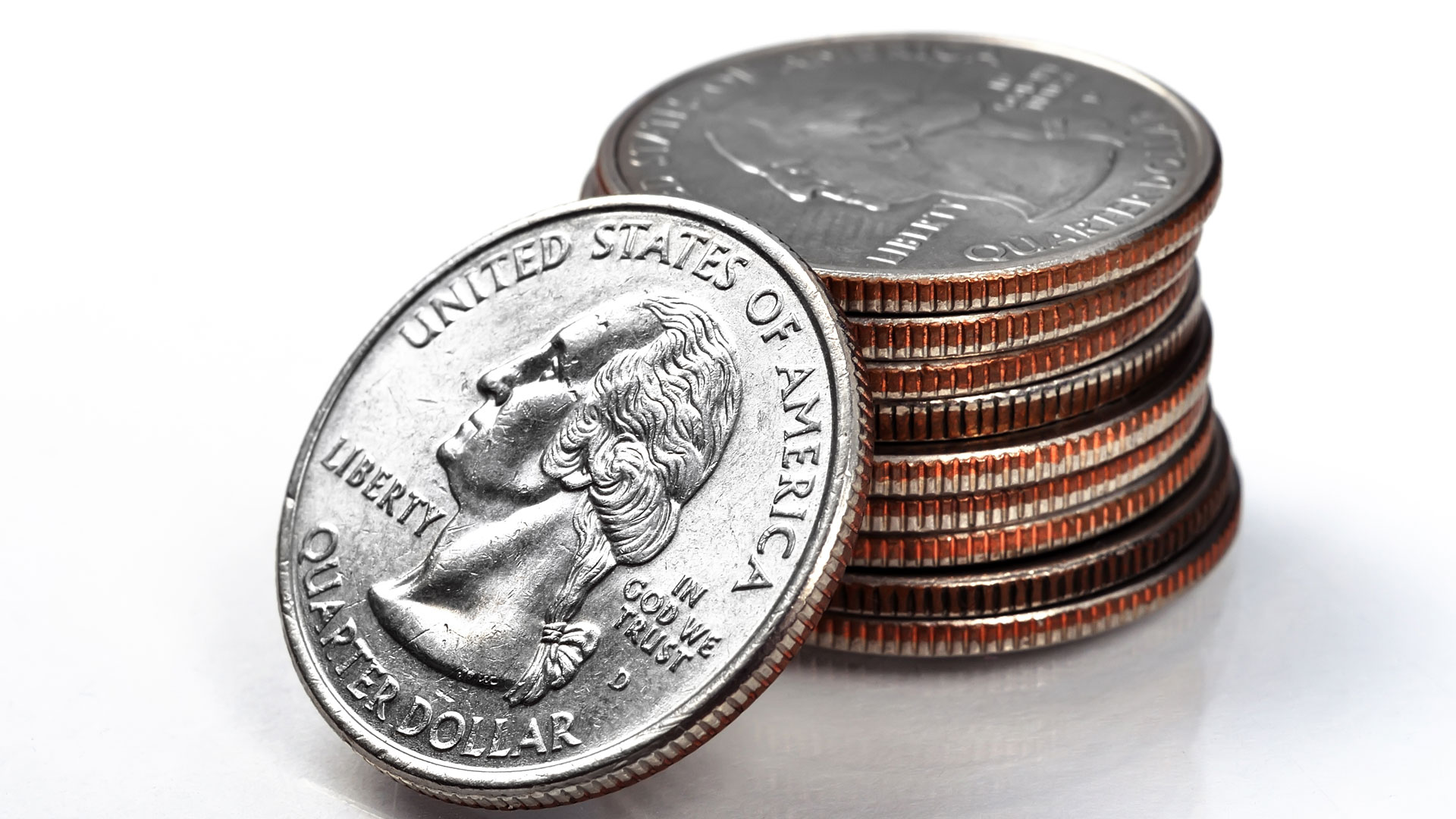
The original laundromat model: quarter-operated machines, no customer service layer, purely self-service. This model dominated for five decades because it worked. Customers expected nothing more than functional machines and a clean environment. The competitive differentiator was location — the laundromat closest to the customer won.
The limitations of coin-only operation were real but manageable: customers needed to carry exact change, machines could not price dynamically, and revenue tracking required physically collecting and counting coins. But for a generation of laundromat owners, this was simply how the business worked.
Wave 2: Card Readers (2000s-2015)
When card payment systems arrived in laundromats, the resistance was fierce. "My customers want to use quarters." "Card readers break down." "The processing fees eat my margins." Every objection was reasonable. And every objection was wrong.
Card readers solved multiple pain points simultaneously: customers no longer needed exact change, owners could track revenue digitally, pricing could be adjusted without physically retooling machines, and the average transaction value increased because customers were no longer limited by the coins in their pocket. Laundromats with card readers saw 15-25% higher revenue per machine than coin-only competitors.
The adoption curve followed a predictable pattern: early adopters gained advantage, the majority adopted over 5-7 years, and holdouts found themselves at a growing competitive disadvantage. By 2015, coin-only laundromats were viewed as outdated. The technology that was once controversial became the baseline expectation.
Wave 3: App-Based Payment (2015-2023)
Mobile apps brought another layer of friction removal: customers could pay from their phone, check machine availability remotely, receive notifications when their cycle finished, and reload their laundry account without visiting a kiosk. Companies like Wash.io, FlyCleaners, and PayRange made app-based laundry mainstream.
The resistance was familiar: "My customers are not tech-savvy." "Apps are for millennials." "My machines are not compatible." And the outcome was familiar too: laundromats with app integration saw higher customer frequency, better retention, and the ability to market directly to customers through push notifications and promotions.
By 2023, app-based payment was not universal — but it was no longer unusual. The adoption curve had reached the early majority. Laundromats without any digital payment option were losing ground to competitors who offered frictionless mobile payment.
Wave 4: AI Customer Service (2025-Present)
This is where we are now. AI is the fourth wave — and it follows the same pattern as every wave before it. Early adopters are gaining measurable advantage. The majority is watching and waiting. And the objections are identical to those raised against card readers and apps: "My customers prefer talking to a person." "AI is too impersonal." "It's too expensive for my business."
The parallel to card readers circa 2008 is almost exact. Card readers in 2008 were available, proven, and clearly beneficial — but most owners were still skeptical. Within 7 years, they became standard. AI in 2026 is in the same position: available, proven, and clearly beneficial. The adoption curve has started, and the early movers are building advantages that will compound over time.
AI is where card readers were in 2008. The technology is proven. The ROI is clear. The early adopters are winning. The only question is whether you adopt now — or spend the next 5 years catching up to competitors who did.
The Five Pillars of the Digital Laundromat
A fully digitized laundromat operates across five pillars. Not every laundromat needs all five — but understanding the framework helps you identify where your biggest gaps and opportunities are:
1. Payments
Coin, card, app, and mobile wallet support. This is the most mature pillar — most modern laundromats have addressed this. If you are still coin-only, this is your first priority, but it is separate from AI.
2. Operations
Machine monitoring, maintenance scheduling, inventory tracking, and staff management. POS systems like CleanCloud and Curbside handle this layer. Operational efficiency drives margins.
3. Marketing
Google presence, geofencing ads, local SEO, social media, and review management. This pillar drives awareness — getting customers to know you exist. GPS-verified geofencing is the most effective channel for laundromats.
4. Customer Service
Phone handling, chat, messaging, lead capture, order booking, and customer retention. This is where AI sits — and this is the pillar with the largest gap between what customers expect and what most laundromats deliver.
5. Analytics
Revenue tracking, customer behavior data, marketing attribution, and performance dashboards. This pillar informs decisions across all other pillars. AI generates valuable analytics as a byproduct of every customer interaction.
For most laundromats in 2026, pillars 1 and 2 (payments and operations) are partially or fully addressed. Pillar 3 (marketing) is active but often inefficient. Pillar 4 (customer service) is the biggest gap — and it is the pillar where AI delivers the most immediate, measurable ROI. Pillar 5 (analytics) improves automatically when you address pillar 4, because AI generates data from every interaction.
Digital Transformation at a Glance
The Full-Funnel Digital Laundromat
The most successful laundromats in 2026 are not just using one technology — they are combining tools across the marketing and customer service pillars to create a complete digital funnel. Here is what that looks like in practice:
Awareness: GPS-Verified Geofencing
Geofencing ads target potential customers within a defined radius of the laundromat — people who live, work, or pass through the area. The ads appear on mobile devices while targets are near competitor locations, apartment complexes, or the laundromat itself. CWAD Agency's geofencing is GPS-verified, meaning every visit is confirmed by real GPS data, not estimates.
Engagement: AI Chat and Phone
When a potential customer visits the website or calls, the AI agent engages immediately. It answers questions, quotes pricing, and captures lead information. The visitor who saw a geofencing ad 20 minutes ago is now talking to an AI that can convert them in under 2 minutes.
Conversion: Order Booking
The AI books WDF orders directly — collecting address, pickup time, and preferences. The visitor goes from ad impression to booked order in a single session. No friction. No waiting. No "call us during business hours."
Retention: Customer Memory
After the first order, the AI remembers everything about the customer. Preferences, schedule, order history. The next interaction starts with recognition, not repetition. Retention rates climb 23% because customers feel known.
Advocacy: Review Automation
After a positive interaction, the AI prompts the customer to leave a Google review. Each review improves local search visibility, driving more awareness. The funnel becomes self-reinforcing: more reviews lead to more visibility, which leads to more customers, which leads to more reviews.
This is the full-funnel digital laundromat. It is not theoretical — CWAD Agency clients are running this exact funnel today. The combination of geofencing (marketing pillar) and AI agent (customer service pillar) creates a system where every dollar spent on awareness is efficiently converted into revenue through automated engagement, booking, and retention.
The Digital Divide: What Happens to Those Who Don't Adapt
Every technology wave creates a divide between adopters and holdouts. The divide starts small — a slight advantage in customer experience, a marginal increase in revenue — and then compounds. Within 5 years, the gap is structural.
Laundromats that did not adopt card readers by 2015 were not just slightly behind — they were losing customers to competitors who offered a fundamentally better experience. The same dynamic is beginning with AI. Laundromats with AI customer service answer every call, engage every website visitor, and serve customers at 11 PM. Laundromats without AI send calls to voicemail, have static websites, and are invisible after closing time.
The gap compounds because AI generates data that improves over time. The laundromat that deploys AI today has 12 months of customer data, refined knowledge bases, and proven conversion patterns by 2027. A competitor who starts in 2027 is starting from zero while competing against an established system. The first-mover advantage is real, measurable, and difficult to overcome.
The Compounding Effect
Month 1: Your AI captures its first leads. Month 6: Customer profiles are deep, retention is measurably higher, and upselling generates additional revenue. Month 12: Your AI has handled thousands of interactions, your knowledge base is refined, your Google reviews have increased, and your customer base has grown through retention plus acquisition. A competitor starting at month 12 is 12 months of compound learning behind you.
Starting the Transformation: The $99 First Step
Digital transformation does not require replacing your machines, overhauling your operations, or investing tens of thousands of dollars. It requires addressing the single biggest gap in your business — customer service — with a tool that costs $99/month and deploys in one day.
This is the lesson from every technology wave: you do not need to do everything at once. You need to start with the highest-ROI investment and build from there. For laundromats in 2026, the highest-ROI investment is AI customer service because it addresses the widest gap (customer service expectations vs. delivery) at the lowest cost ($99/month) with the fastest time-to-value (results within 30 days).
The owners who adopted card readers first did not do it because they were tech enthusiasts. They did it because the math made sense. The same is true for AI. This is not about being on the cutting edge of technology — it is about capturing revenue you are currently losing, serving customers you are currently failing, and building a competitive position that strengthens over time.
Start Your Digital Transformation Today
CWAD Agency's AI agent is the highest-ROI first step in laundromat digital transformation. Answer every call, engage every visitor, capture every lead — starting at $99/month. No machines to replace. No software to install. Results in 30 days. See the platform.
See the PlatformFrequently Asked Questions
Do I need to replace my machines to go digital?
No. AI customer service operates independently of your machines. It handles phone calls, website chat, WhatsApp messages, and lead capture — none of which require machine upgrades. You can deploy AI with any machines, any payment system, and any POS. Your equipment stays the same; your customer service gets dramatically better.
What is the first step in digital transformation?
Start with AI chat at $99/month. This is the highest-ROI first step because it addresses the most common revenue leak — missed inquiries and website bounces — at the lowest cost. You do not need to overhaul your entire operation. Start with the customer service layer, see results in 30 days, and expand from there.
How long until I see results?
Most laundromat owners see measurable results within the first 30 days. The AI captures leads from day one — missed calls answered, website visitors engaged, after-hours inquiries captured. By day 30, you have a clear picture of how many additional customers the AI is bringing in and what the revenue looks like relative to the monthly cost.
Related Articles
The Future of Laundromat Customer Service
Where the $7.1B laundromat industry is heading — AI, POS integration, and voice agents.
AI Adoption in the Laundromat Industry: Where We Stand
Data on AI adoption rates, use cases, and ROI across the laundromat industry in 2026.
The Laundromat Automation Starter Guide
A step-by-step guide to automating your laundromat — starting with the highest-ROI investments.