A customer calls your laundromat. They ask, in Spanish: "¿Cuánto cuesta el lavado por libra?" — How much does wash-and-fold cost per pound?
If nobody on your staff speaks Spanish at that moment — or if the call goes to an English-only voicemail — that customer hangs up. They call the laundromat down the block. If that laundromat has a Spanish-speaking employee or a bilingual AI, they get the order. You don't.
Now multiply that by every Spanish-speaking customer who tried to call you this week, this month, this year. In many laundromat markets — across Texas, Florida, California, New York, New Jersey, and throughout the Southwest — this is not a niche scenario. This is 40 to 60 percent of your potential customer base.
The Hispanic Market in the Laundry Industry
Hispanic Americans represent the fastest-growing consumer demographic in the United States. Their combined buying power has crossed $2.8 trillion — larger than the GDP of most countries. And laundromats index exceptionally high with this demographic.
There are several reasons for this. Laundromats serve urban and dense suburban markets where Hispanic communities are heavily concentrated. Apartment living — more common among Hispanic households — means fewer in-unit washers and dryers, driving higher laundromat usage. WDF services specifically appeal to working Hispanic families with multiple breadwinners and limited time.
If your laundromat is in a neighborhood that's 40% or more Hispanic, you have an opportunity — or a problem, depending on how you're handling language.
High-Concentration Markets
Texas, California, Florida, New York, New Jersey, Illinois, Arizona, Colorado, Nevada — markets where Hispanic laundromat customers can represent 50-70% of your walk-in traffic.
Growing Markets
Georgia, North Carolina, Virginia, Pennsylvania, Washington — emerging markets where Hispanic population growth is outpacing the national average and laundromat demographics are shifting rapidly.
Language Preference Data
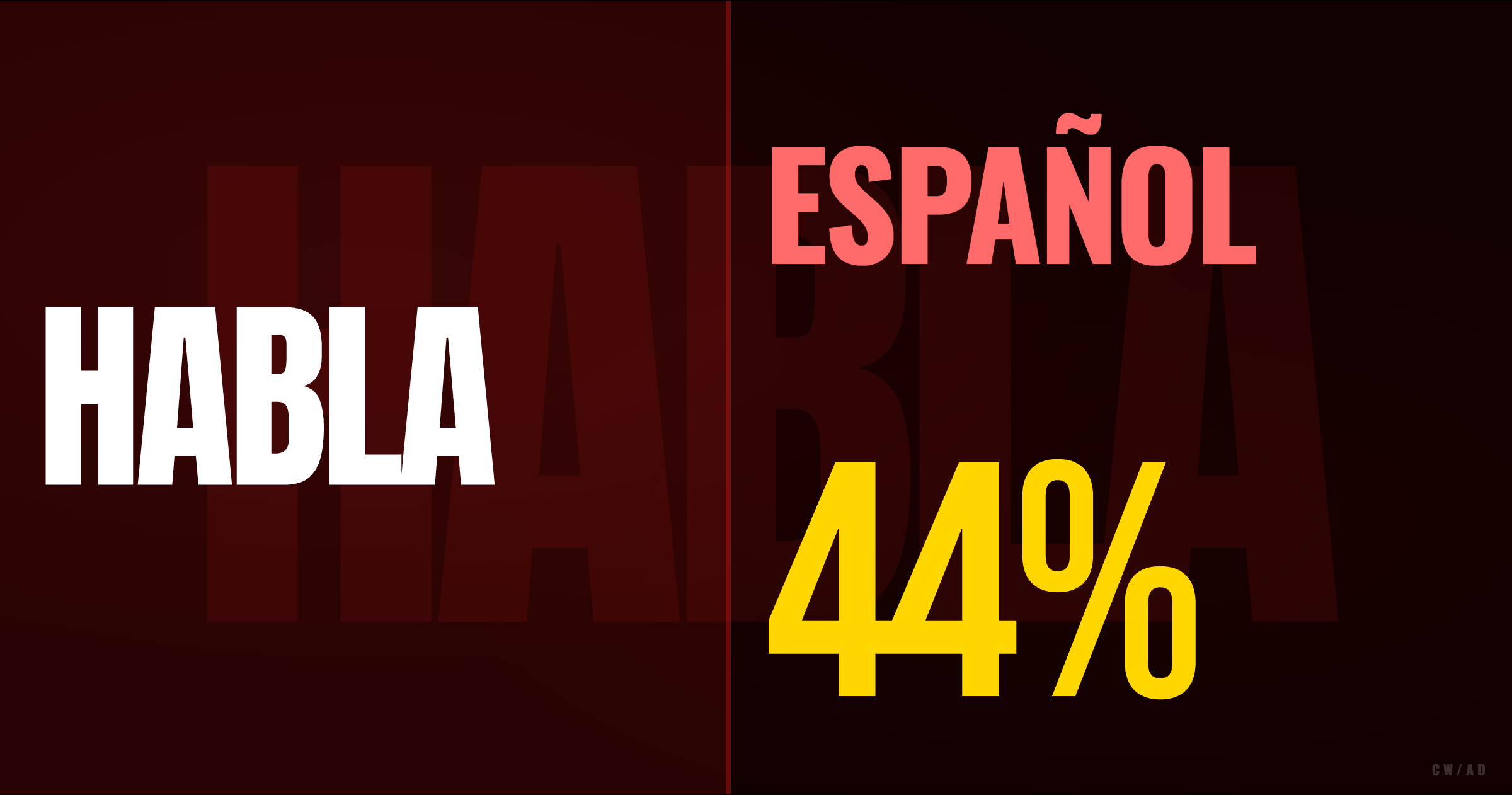
76% of Hispanic consumers prefer Spanish when engaging with businesses. For first-generation immigrants and families where Spanish is the primary home language, English-only service is a real barrier to conversion.
Loyalty Impact
80% of Hispanic consumers report stronger brand loyalty to businesses that serve them in Spanish. In the laundromat context, this means higher WDF repeat order rates and more word-of-mouth referrals within the community.
The data is unambiguous. Spanish-language service isn't a courtesy — it's a revenue strategy. The laundromats that crack this earn loyalty that English-only competitors simply cannot match.
What English-Only Service Costs You
Let's get specific. If 50% of your market prefers Spanish and you're not serving them in Spanish, you're not capturing 50% of your addressable market. You're leaving half your potential revenue on the table — not through bad service, not through bad pricing, but simply through a language gap.
A Spanish-speaking customer who calls and reaches an English-only voicemail doesn't think "I'll try again later when someone who speaks Spanish is there." They think "this place isn't for me" — and they find a place that feels like it is.
The word-of-mouth effect amplifies this. A Spanish-speaking customer who has a great experience at your bilingual laundromat tells other Spanish-speaking neighbors, family members, and co-workers. A bad experience — being unable to communicate — spreads just as fast in the other direction.
Why "We Have One Spanish-Speaking Employee" Isn't Enough
Many laundromat owners respond to the language challenge by hiring one bilingual staff member. This helps — but it doesn't solve the problem.
Your bilingual employee can't always be there. They have days off, call out sick, and work shifts that don't cover every hour you're open. When they're not there, Spanish-speaking callers still get an English-only voicemail. When they're busy with WDF orders, Spanish-speaking callers still go unanswered.
And they definitely can't answer the phone at 10 PM when a Spanish-speaking customer is looking for next-day WDF pickup scheduling.
The Gaps That One Bilingual Employee Can't Fill
- Days off and sick days — Spanish-speaking customers who call on their day off reach English-only service
- Peak hour conflicts — When your bilingual employee is folding laundry during the rush, they can't also be on the phone
- After-hours inquiries — No employee covers the 9 PM – 8 AM window when customers are researching and planning
- Simultaneous Spanish calls — If two Spanish-speaking customers call at the same time, your one bilingual employee can only take one
- WhatsApp and chat — Unless your employee is also monitoring digital channels in Spanish, those inquiries go unanswered
A bilingual employee is valuable. But they're one person with one set of hours. What your Spanish-speaking customers need is consistent, always-available service in their language — across every channel, at every hour.
The Hispanic Laundromat Market — Real Numbers
What Bilingual AI Actually Sounds Like
It's important to clarify what we mean by "bilingual AI" — because there's a significant difference between real-time translation and a properly trained bilingual AI agent.
Real-time translation tools like Google Translate process language mechanically. They make errors with idiomatic expressions, regional Spanish dialects, and industry-specific vocabulary. A customer saying "¿hacen servicio de recogida a domicilio?" (Do you do home pickup service?) might get garbled into something awkward and confusing.
A bilingual AI agent trained on laundromat operations speaks natural, conversational Spanish — including the specific terminology that laundry service customers use. Here's what an actual AI-handled call looks like:
Sample Bilingual AI Conversation
Customer: Hola, quiero saber cuánto cobran por libra para el servicio de lavado y doblado.
AI Agent: Hola, gracias por llamar. Cobramos $2.25 por libra, con un mínimo de 15 libras por pedido. El tiempo de entrega es de 24 horas. ¿Le gustaría programar una recogida a domicilio?
Customer: Sí, ¿cuál es el área de servicio?
AI Agent: Cubrimos un radio de 5 millas desde nuestra tienda. ¿Me puede dar su dirección para confirmar?
Translation: The AI quotes pricing, confirms minimum order, explains turnaround time, offers pickup scheduling, and asks for the address — all in natural, conversational Spanish. The customer books the order.
This isn't translation. It's a genuine bilingual conversation handled end-to-end by AI — on the phone, via chat, or on WhatsApp. The customer gets the same quality of service a Spanish-speaking human attendant would provide, at any hour of the day.
WhatsApp: The Spanish-Speaking Customer's Preferred Channel
There's one more channel that English-focused laundromat operators consistently underestimate: WhatsApp.
WhatsApp is the dominant messaging platform for Hispanic consumers in the United States. It's how families communicate, how communities share recommendations, and increasingly, how consumers prefer to interact with local service businesses. A laundromat phone number that's also a WhatsApp contact — and that responds in Spanish via AI — is a massive advantage in Hispanic markets.
A Spanish-speaking customer who discovers your laundromat doesn't need to call. They can WhatsApp the number, ask their question in Spanish, get an instant response, and book a WDF pickup — all without a phone call and all in their preferred language. This is the customer experience that drives referrals.
It's also how word-of-mouth spreads in tight-knit communities. When a satisfied customer shares your WhatsApp number in a family group chat with the note "this laundromat speaks Spanish and their service is great" — that recommendation reaches 20 potential customers instantly.
Building a Bilingual Laundromat Operation
Going bilingual isn't just about technology. It's about a business decision to serve your whole market, not just the English-speaking portion. Here's what the full picture looks like:
Phone Coverage
AI answers in English or Spanish based on the language the customer uses. No prompts, no menus — the AI detects language and responds naturally.
Website Chat
Chat widget greets visitors in English and transitions to Spanish the moment a customer writes in Spanish. Fully bilingual throughout the conversation.
Your WhatsApp business number handled by bilingual AI. Spanish-speaking customers can text, get answers, book orders, and schedule pickups entirely in Spanish.
In-Store Signage
Spanish-language pricing, WDF instructions, and service menus posted prominently. Signals to Spanish-speaking walk-ins that they're welcome before they even speak a word.
The laundromats that win in Hispanic markets in 2026 are the ones treating bilingual service as a core operational capability, not an afterthought. AI makes this achievable for any operator at any budget — without hiring a bilingual staff member for every shift.
CW/AD AI Agent: Fully Bilingual. Always Available. Built for Your Market.
The CW/AD AI Agent speaks fluent Spanish — not translation, but genuine bilingual conversation trained on laundromat operations. It handles phone calls, website chat, and WhatsApp in English and Spanish simultaneously. Every Spanish-speaking customer who contacts your laundromat gets an immediate, natural-language response in their preferred language.
Bilingual coverage is included in the Growth plan at $199/month and Scale at $349/month. The Starter plan at $99/month covers English-only. All plans include same-week setup and unlimited conversations. In markets where 40-60% of customers prefer Spanish, the Growth plan pays for itself in recovered revenue within days.
Your market is already bilingual. Your laundromat should be too. See AI Agent plans with bilingual support →
Frequently Asked Questions
What percentage of laundromat customers are Spanish-speaking?
In many urban and suburban markets, 40-60% of laundromat customers are Spanish-speaking. The exact percentage depends on your specific location and neighborhood demographics. Markets in Texas, Florida, California, New York, New Jersey, and the Southwest often see the highest Hispanic customer concentrations at laundromats.
Why do Spanish-speaking customers prefer service in Spanish?
Research from Nielsen and the Hispanic Marketing Council consistently shows that 76% of Hispanic consumers prefer to engage with brands in Spanish when given the option. Beyond preference, Spanish-language communication reduces miscommunication, builds trust faster, and creates the kind of personal connection that drives repeat business and referrals. For laundromats, where WDF instructions must be communicated precisely, language accuracy is also a practical quality concern.
Is AI translation good enough for laundromat customer service in Spanish?
There is a significant difference between real-time machine translation (like Google Translate) and a properly trained bilingual AI agent. A bilingual AI trained on laundromat terminology — pricing, WDF instructions, pickup scheduling, special garment handling — conducts genuine Spanish-language conversations. It understands regional expressions, laundry-specific vocabulary, and conversational nuance in ways that real-time translation cannot match.
How does bilingual AI affect laundromat customer loyalty?
Research shows that 80% of Hispanic consumers show stronger brand loyalty to businesses that serve them in Spanish. For laundromats, this translates directly to higher WDF repeat order rates, more referrals within the community, and significantly higher lifetime customer value. A bilingual AI agent is one of the highest-ROI investments a laundromat in a Hispanic market can make.
Related Articles
Multi-Language Targeting for Diverse Communities
How to reach diverse communities with your laundromat advertising — going beyond language to cultural targeting strategy.
Every Missed Call Costs Your Laundromat $42
The full revenue math on missed calls — including the calls your English-only system can't handle in the first place.
Your Laundromat Closes at 9 PM. Your Customers Don't.
After-hours AI coverage — combined with bilingual capability — captures every Spanish-speaking late-night inquiry your competitors are missing.